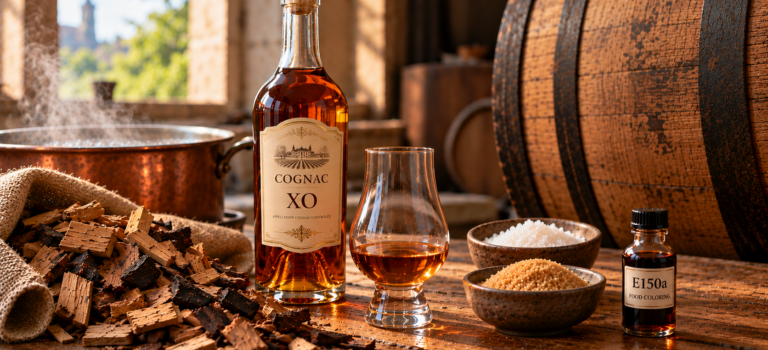
Boisé, Sugar and Caramel: What’s Really in Your Cognac?

Boisé, Sugar and Caramel: What’s Really in Your Cognac?

Three permitted adjustments, a few persistent misconceptions, and a rather uncomfortable question about transparency.

Cognac is made from grapes, distilled twice in copper pot stills and matured in oak. Simple enough. But what happens between the cask and the bottle isn’t always quite as straightforward as the romantic descriptions of centuries-old traditions might suggest.

Unlike what some enthusiasts assume, Cognac regulations allow certain adjustments involving sugar, caramel colouring and oak infusions, commonly associated with boisé. None of these automatically makes a Cognac inferior. But they can influence its appearance, texture and, potentially, its flavour. And you won’t necessarily find them mentioned on the label.

So what exactly are producers allowed to add? How do these adjustments work? Can we detect them by tasting? And should we care?

Let’s look at what’s actually permitted, what it can do to the liquid, and why the distinction between traditional craftsmanship and unnecessary manipulation isn’t always as obvious as we’d like.

Read more →
Rancio: the most overused word?

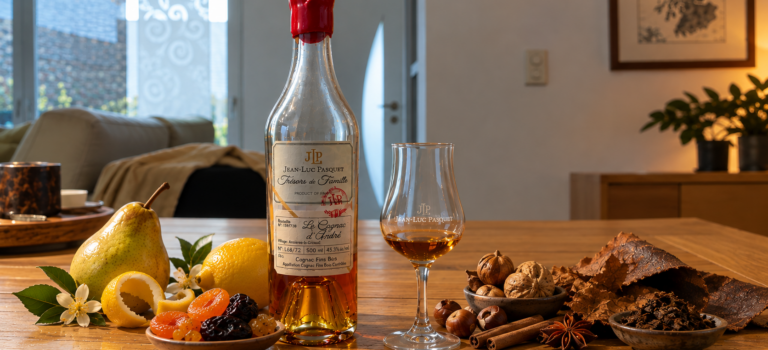
Rancio: The Most Overused Word in Old Cognac?

Walnuts, mushrooms, old leather and the chemistry behind one of Cognac’s most mysterious characteristics.

There are a few words that seem almost compulsory when describing very old Cognac. Rancio is one of them.

Open a sufficiently old Grande Champagne, find some walnuts, mushrooms, leather or old furniture on the nose, and sooner or later somebody will mention rancio Charentais. Preferably with a suitably reverential expression.

And I understand why. Some of the most extraordinary Cognacs I’ve tasted have displayed precisely those characteristics. That combination of old wood, dried fruit, earthy notes, nuts and remarkable aromatic complexity can be fascinating.

But what exactly is rancio? Is it a particular aroma? A collection of aromas? A chemical reaction? A stage of maturation? Something that only appears after several decades in oak? And perhaps more importantly, are we sometimes using the word simply because the Cognac is old and expensive?

Let’s investigate.

Read more →
Cognac label

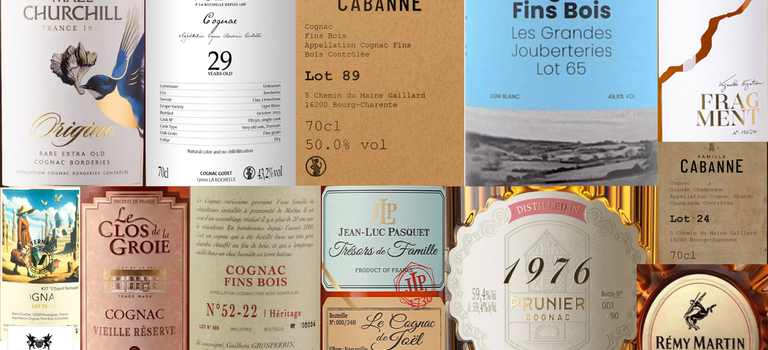
What Your Cognac Label Tells You. And What It Doesn’t.

From XO and Grande Champagne to Lot 75, vintage Cognacs and brut de fût: how much can we really learn from a bottle?

Independent (and sometimes official) Scotch whisky labels can be remarkably informative. Distillation dates, cask numbers, wood types, outturns, bottling strengths… sometimes there is so much information that you almost need a magnifying glass.

Cognac labels can be a rather different experience.

One bottle proudly announces that it is an XO. Another says Hors d’Âge. A third gives us a precise vintage, while another simply says Lot 75. Some mention Grande Champagne, others Fine Champagne. One is bottled at 40%, another at 54%, and both may contain eaux-de-vie that have spent decades in oak.

And somehow we’re supposed to compare them.

The problem isn’t that Cognac labels tell us nothing. They can tell us quite a lot. It’s that what they guarantee, what they suggest and what we assume they mean are three different things.

So let’s decode them.

Read more →
What is Cognac?

What Is Cognac?

As I will begin and enjoy (I hope), starting tomorrow, my first Cognac Advent Calendar, I thought it would be useful to take the time to explain here what is Cognac. This renowned and prestigious variety of brandy has a storied history rooted in the Charente region of France. Known for its refined flavours, complexity, and artisanal production methods, cognac holds a revered position in the world of spirits. Its name is legally protected, ensuring that only brandy produced under strict guidelines in the Cognac region can carry this prestigious title. From its historical emergence as a trade commodity to its modern status as a symbol of sophistication, cognac’s legacy is rich and multifaceted. This article explores the origins of cognac, its historical significance, and the meticulous process that defines its creation.

Read more →