We explore how alcohol strength shapes whisky’s sensory profile through three Domaine des Hautes Glaces Epistémè R15D24 rye whiskies. Cereal type, fermentation, distillation, and wood maturation all shape the final dram you drink. But what about ABV? Water drops often transform whisky – sometimes improving it, sometimes not. Domaine des Hautes Glaces, already committed to true terroir expression (unlike Waterford’s cask-heavy chaos), bottled identical spirits from one cask at three strengths to test this. First, we unpack their Epistémè range. Then we taste the three R15D24 ryes to discover ABV’s impact.
Domaine Des Hautes Glaces Epistémè
Domaine des Hautes Glaces presents Epistémè as its exploratory collection. It’s a working laboratory where each release functions as a controlled experiment in organic whisky production. Rather than pursuing a fixed house style, the collection invites drinkers to observe how specific variables shape flavour. That way, they transform comparative tasting into an active learning experience. The name itself signals this approach: epistémè suggests knowledge derived through investigation, fitting perfectly with a collection dedicated to unmasking terroir, technique, and the interplay between grain and cask.
The collection’s structure operates around distinct ‘waves’ or explorations, each examining one core variable. The naming system, though initially cryptic, reflects this scientific rigour. Each expression follows a code where the first letter denotes grain (R for rye, S for spelt, B for barley), followed by the vintage designation, an exploration category, and the bottling year. Geometric symbols distinguish the individual expressions within each thematic release.
The R18P23 series exemplifies Epistémè’s terroir-focused approach through its twin expressions. It featured mirror bottlings of 100% malted rye distilled simultaneously under identical conditions during summer 2019, yet harvested from two distinct plot locations. The CARRÉ expression originates from the Mont-Aiguille plot, where calcaire soils enriched by cold Vercors mountain waters and their sediment load create one microclimate. On the other hand, the ROND edition emerges from the Vulson terroir with markedly different conditions. They were both aged for double maturation – first in ex-Cognac casks, then in small 112-litre feuillettes (oak vessels previously used only for limited releases). Filled at 47% ABV, these bottlings showcase how a six-hectare difference in geography generates perceptible sensory distinction. The CARRÉ evokes wild flowers and architectural clarity; the ROND develops differently through its specific environmental exposure.
Another remarkable expression, S12U23, ventures into forgotten grain territory. At 53% ABV with 10 years of ageing and only 110 numbered bottles produced, this 100% spelt whisky represents Hautes Glaces’ continuation of a 2011-onward project exploring malted spelt, a cereal largely abandoned by the modern spirits industry.
The most recent systematic exploration, RØØF 24, directly investigates finish influence through four expressions. Each was drawn from the same rye distillate but finished in entirely different cask regimens: ex-Cognac (★), ex-Duras red wine (▲), ex-Vin Jaune (■), and ex-Sauternes (●). These bottlings range from 48.8% to 50.6% ABV and represent Hautes Glaces’ explicitly non-dogmatic stance on wood management.
Epistémè R15D24 : A Proof-Focused Study in Rye Expression
The most recent addition to Domaine des Hautes Glaces’ exploratory collection, R15D24 marks a departure from the distillery’s typical terroir-focused investigations. Rather than examining how does geography shape flavour, this 2024 release poses a more fundamental question: how does alcohol strength – the most basic numerical descriptor on any whisky bottle – actually reshape the sensory profile of the same spirit?
All three expressions originate from 100% malted Caroas rye harvested from a single plot within the Gabert climate during August 2015. The grains were fermented with Hautes Glaces’ indigenous yeast strains for their characteristic extended fermentation period (140 hours). Then, they were distilled through wood-fired Charentais stills during the summer of 2019. Every drop passed through an identical ex-yellow wine (Vin Jaune) cask number 254, aging there continuously for eight years until the 2024 bottling. This complete alignment of source material, fermentation protocol, distillation method, and cask history transforms the proofs into controlled variables – isolating alcohol strength as the sole manipulated factor.
The Gabert terroir itself remains constant across all three bottlings: calcaire-enriched soil, cold mountain water enriched by Vercors sediment, and the mineral-driven characteristics that define this high-altitude (900+ metre) French Alpine microclimate. They hold terroir, grain variety, cask type, and age identical while systematically varying proof. That way, R15D24 functions as Hautes Glaces’ most scientifically rigorous Epistémè release – an invitation to taste how a single mathematical variable – percentage alcohol by volume – fundamentally restructures flavour perception and emotional response to the identical liquid base.
The Epistémè R15D24 features three expressions, only differentiated by their alcohol content. They start with R15D24 ■ CARRÉ, bottled at 46% ABV. Next is R15D24 ● ROND, bottled at 52% ABV. Finally, the series culminates with R15D24 ▲ TRIANGLE, bottled at 59% ABV. As this series explores the impact of alcohol content, we will not taste the two expressions bottled above 50% ABV with water, only neat.
Domaine des Hautes Glaces Epistémè R15D24 ■ CARRÉ (2024) Review
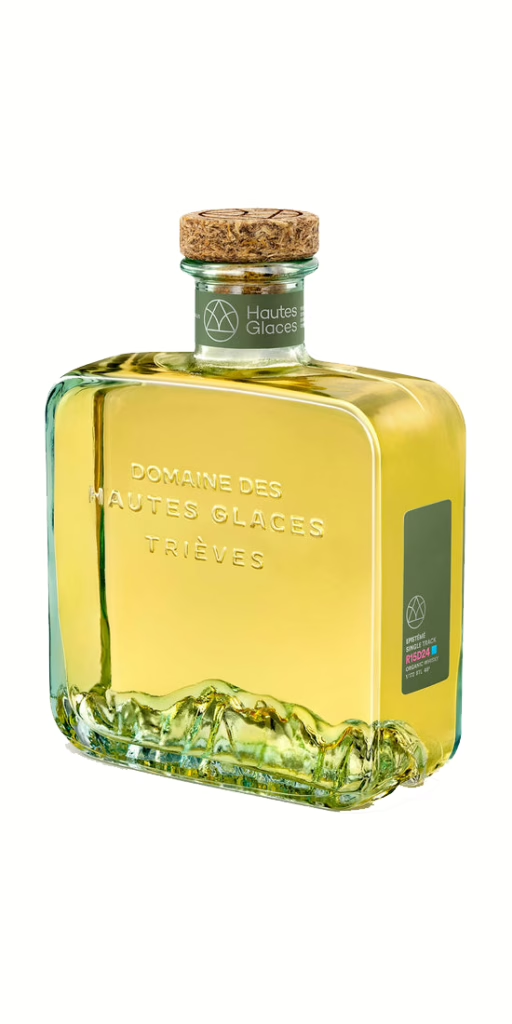
We start with the D. H. G. Epistémè R15D24 ■ CARRÉ. This is the lowest ABV out of the three R15D24, as it is reduced to 46% ABV before bottling. It underwent 8 years of maturation in an ex-Vin Jaune cask #254. DHG filled 172 of their splendid 500 ml bottles at 46% ABV, without chill filtration nor added colour.
Colour:
Yellow gold.
Nose:
Neat: The nose shows ripe yellow‑fleshed stone fruits, with dried apricot and peach leading over a clean rye grain core. There are also some juicy pears. Oxidative notes recall vin jaune: dried nuts, walnut skin and hazelnut crumble, with a light oxidative flor hint wrapped in honey and soft spice.
Palate:
Neat: The palate feels focused yet gentle at 46%, with juicy orchard and yellow fruits, toasted cereal sweetness and a firm rye backbone of spices. The ex‑vin jaune cask brings a subtle nutty bitterness, dried fruit depth and a hint of Jura wine funk, while the spice stays precise rather than hot.
Finish:
The finish runs medium‑long, on toasted nuts, dry cereal, light flor‑like oxidative notes and echoing yellow fruit. It leaves a clean, savoury‑fruity impression that invites another sip.
Comments:
This DHG R15D24 CARRE is a very nice rye whisky, fruity and with a strong rye cereal backbone. The 46% ABV makes it very easy to drink, yet keeps it interesting enough, as the dilution was not overdone.
Rating: 6.5/10
Domaine des Hautes Glaces Epistémè R15D24 ● ROND (2024) Review
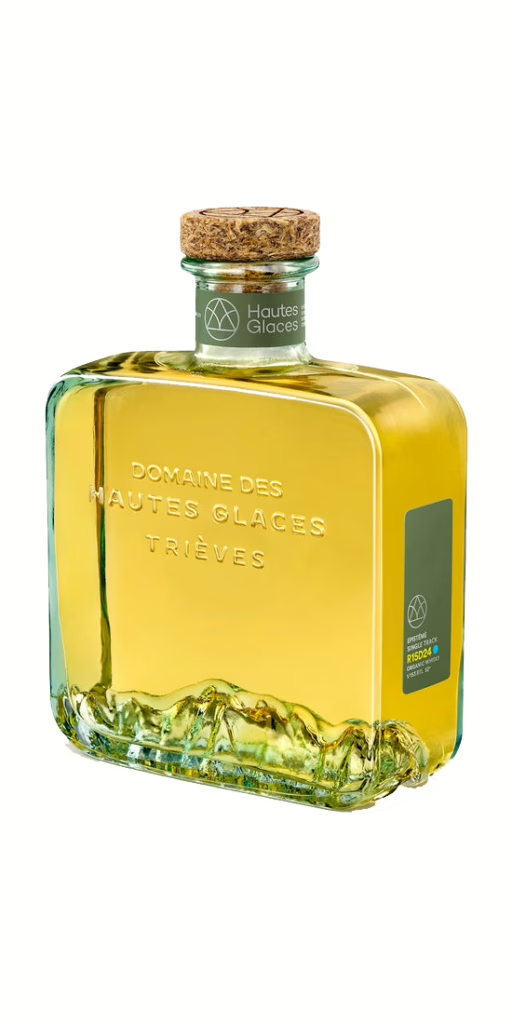
Next, we have the D. H. G. Epistémè R15D24 ● ROND, bottled at 52% ABV. Also taken from the ex-Vin Jaune cask #254, where it spent 8 years of maturation, DHG filled 153 bottles at this intermediate ABV, without chill filtration nor added colour.
Colour:
Old gold.
Nose:
Neat: The nose feels slightly less fruity and sweet than CARRÉ. Cereals, however, are deeper. Dusty malted rye grains, and again that oxidative flor aroma, slightly stronger than on CARRÉ. The stone fruits take more time to appear, and with less intensity.
Palate:
Neat: The palate balances fruit and spice at this strength. Yellow peaches and apricots lead, backed by clean rye grain and nutty depth. Peppery rye bite sharpens, while the cask brings subtle flor and dried fruit layers without dominating. Like the nose, the rye feels stronger, and the palate is less sweet. And again that feeling of dusty malted rye grains.
Finish:
The finish lingers on nutty oxidative notes, pink berries, and 5 berry spices, with vin jaune’s gentle bitterness trailing cleanly.
Comments:
The DHG R15D24 ROND feels slightly more austere than the CARRÉ, and the cask has less to say with the higher ABV. The rye takes the lead over the cask when with CARRÉ it felt more harmonious.
Rating: 6/10
Domaine des Hautes Glaces Epistémè R15D24 ▲ TRIANGLE (2024) Review
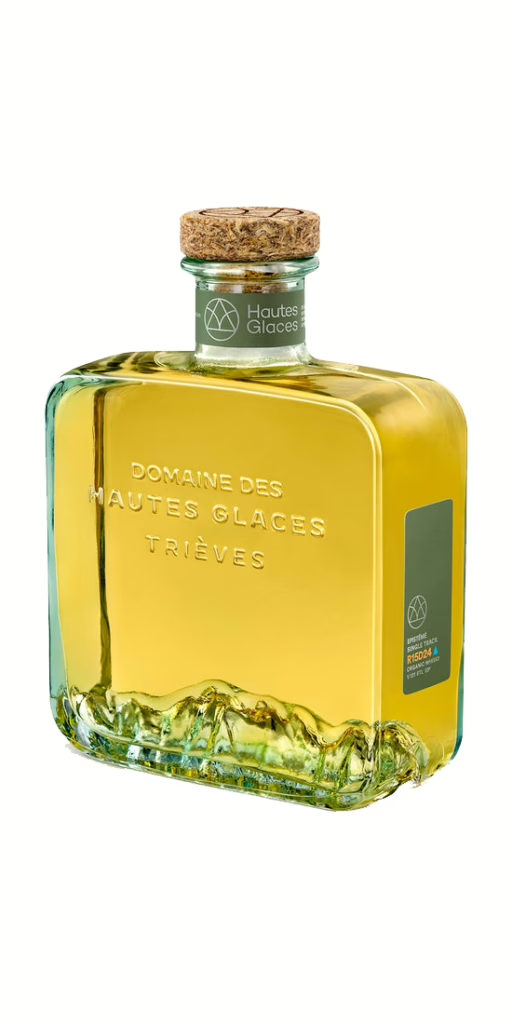
Finally, we have the D. H. G. Epistémè R15D24 ▲ TRIANGLE. Like the two other bottlings, it matured for 8 years in the ex-Vin Jaune cask #254, before being bottled at 59% ABV, the highest ABV of this Epistémè R15D24 series. A total of 131 bottles were filled (500 ml), without chill filtration nor added colour.
Colour:
Amber.
Nose:
Neat: The nose feels deeper than CARRÉ and ROND, with concentrated yellow fruits wrapped in richer nutty tones and a more assertive oxidative flor character from the vin jaune. Pepper and spice are slightly hotter, while the rye grain shows darker, almost earthy cereal tones beneath the fruit.
Palate:
Neat: On the palate, the texture turns creamier, thicker and almost oily, with powerful rye spice and bitterness, still those stone fruits (that are more intense than on ROND, more on par with CARRÉ) and pronounced vin jaune nuttiness. The higher ABV sharpens the pepper and pink‑berry bite, but the oiliness balances the spiciness.
Finish:
The finish runs long, firm and warming, carrying toasted nuts, dry and dusty rye grain, flor‑like oxidative notes and persistent yellow fruit.
Comments:
TRIANGLE leaves the most intense, structured and ‘wild’ impression of the three. The yellow stone fruits that were slightly toned down on ROND are back at the levels of CARRÉ, but the rye itself stays intense and battles with the Jura yellow wine cask.
Rating: 7/10
Final Comments
The alcohol strength spectrum now completes a deliberate arc. It starts at R15D24 ● ROND (46% ABV), where the rye achieves balance and accessibility. Then, it moves through R15D24 ■ CARRÉ (52% ABV), where intensity and structure become pronounced. Finally, it culminates in R15D24 ▲ TRIANGLE (59% ABV), where the spirit reaches its fullest expression – what Hautes Glaces aptly describes as having ‘broad shoulders’.
At 59% ABV, the TRIANGLE becomes the most concentrated interpretation of this Gabert rye. The cask’s influence becomes palpable, the rye’s architectural complexity intensifies, and the spirit’s natural minerality – inherited from the alpine terroir – crystallises with maximum clarity. This is the whisky at its most uncompromising and least diluted, inviting comparison with its more restrained siblings through direct side-by-side evaluation.
The three-proof structure therefore represents a complete sensory map. Accessibility and purity at 46%, clarity and austerity at 52%, and undiluted character at 59%. Each proof level reveals not merely a weakening or strengthening of identical flavours, but different facets of the same Gabert 2015 rye from Domaine des Hautes Glaces.